World Rankings:


A country is not recognised as a member of ISF until the relevant 5-, 6-, or 7-a-side membership has been purchased and paid for in full. ISF membership is granted on a format-specific basis, with each format conferring exclusive rights to represent the country in ISF competitions for that discipline.
ISF memberships operate on a fixed one-year term (1 January – 31 December) and are allocated on a first-come, first-served basis. Once a country’s membership for a specific discipline has been purchased for the membership year, no other organisation may represent that country, enter teams, or hold membership for the same discipline until the following membership year.
Where a country’s membership has been purchased for one format only, any remaining formats that have not been purchased remain available and are not reserved or restricted.

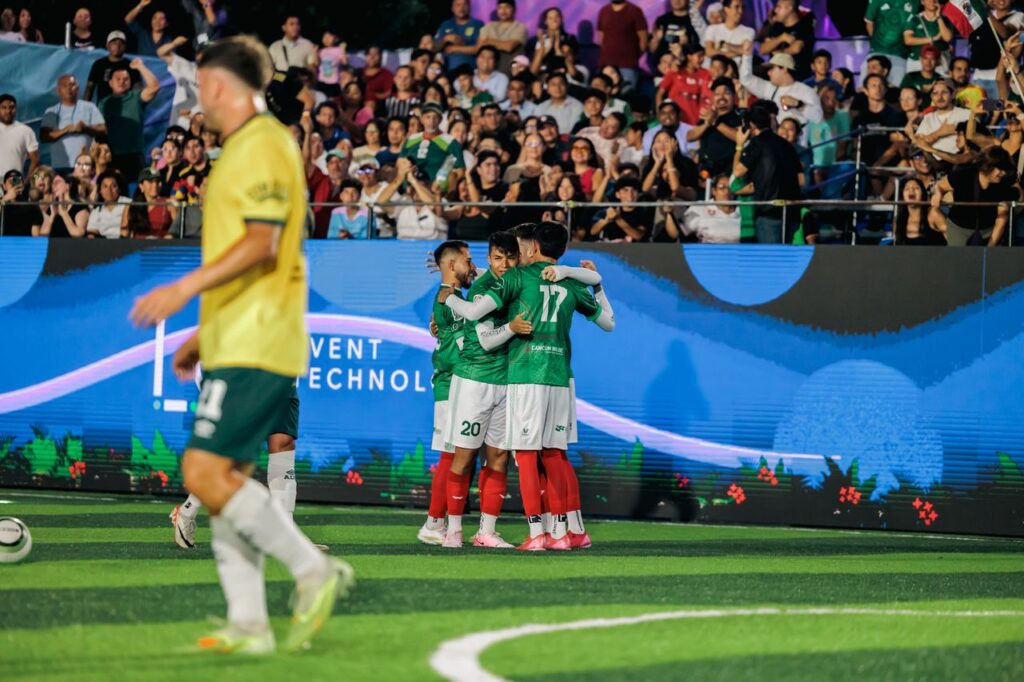
To enter an ISF tournament, organisations must hold an ISF Membership, which is achieved by paying the annual membership fee through the ISF website. Membership is available in three packages: Bronze, Silver, and Gold.
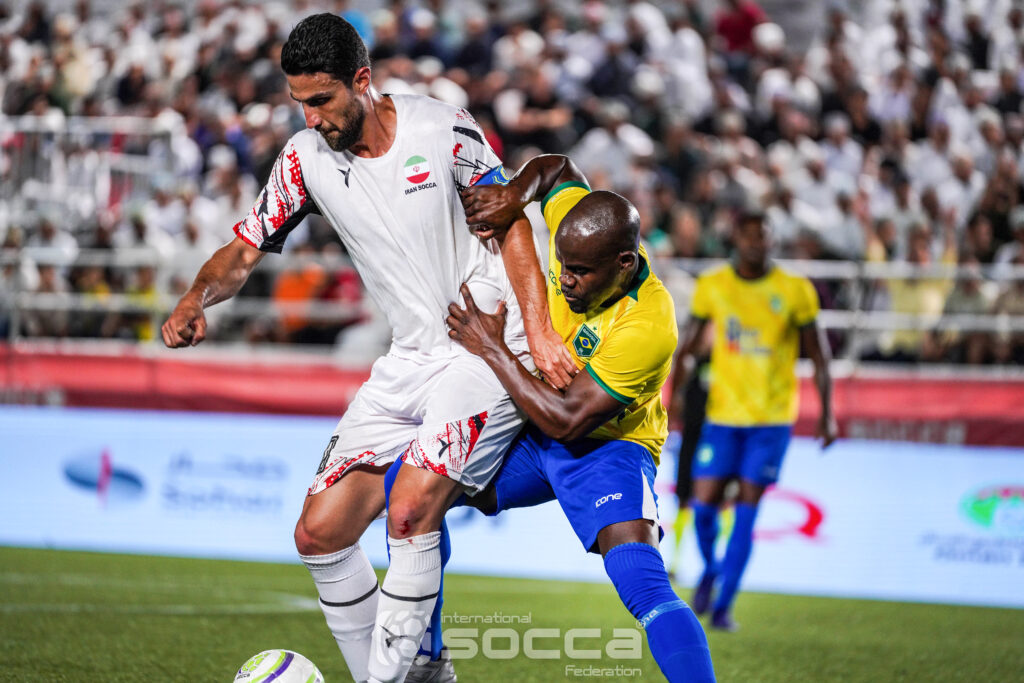
Eligible players are those who hold the nationality of the respective country.
Exceptions may be granted for a maximum of
three players per squad, but also for a maximum of 25% of the nominated squad (max 3 out of 12-15 players, max 2 out of 8-
11 players, max 1 out of 6-7 players).
Exceptions could be provided if at least one of the following criteria is met:
a) The player holds a permanent residence permit in the respective country (this does not refer to holding an EU passport,
nor is that sufficient).
b) The player has an active application for naturalization in the respective country.
c) The player was born in the respective country and has lived there his/her entire life.
d) Individual cases arising from specific political circumstances may be submitted to the Competition Committee, accompanied by a detailed explanation and supporting documentation.
For each player who does not hold the nationality of the country they wish to represent, the respective federation must
submit an application to the ISF Competition Committee and provide the necessary supporting documentation.
Each application will be reviewed and decided on a case-by-case basis.
Applications must be submitted before the start of the tournament as part of the squad registration. If one of the above criteria is met, this merely entitles the applicant to submit an application and does not guarantee eligibility to play.
As part of the accreditation process, passport checks will be carried out on all players. In addition, the Competition Committee reserves the right to carry out further checks before matches if necessary.
Professional Player Rule: The spirit of the sport is amateur, and therefore professional players should not be eligible to
participate.
A player is generally considered a professional if their primary source of income is derived from playing football (either 11-a-side or futsal), and/or if their main professional focus is on football.
Players who earn their primary income through official SOCCA leagues are exempt from this rule.
The ISF Competition Committee will assess eligibility on a case-by-case basis. In doing so, the committee will consider factors
such as the league in which the player competes and the overall sporting level of that league, without automatically including
or excluding specific competitions.
In cases of uncertainty, and upon request, players may be required to provide supporting documentation confirming that
they do not fall under the professional player definition (e.g. employment contracts for their primary occupation or other
proof of income).
The spirit of the game of Socca of a particular player or players (by virtue of financial gain, irregularity or otherwise) has rendered or would render, in the view of ISF, a match or matches in a tournament or competition to be:-
i. Outside the spirit of such tournament or competition; and/or
ii. Damaging or prejudicial to such tournament or competition; and/or
iii. Damaging or prejudicial to the ISF, its reputation, or its aims or objectives
then ISF has the right and power to impose any sanctions upon the relevant player, players, team, country or association from the range of sanctions.
The Competition Committee has the authority to expel any player at any time if it believes that a player does not fit the
criteria of Rule 4 and/or 5.
The national organisation must register up to a maximum of 15 players plus coaches, managers and team officials to the ISF prior to each International Tournament.
At registration, the national organisation will be given a date and a venue for a pre-tournament meeting. Attendance at this meeting is expected where the rules of the tournament will be discussed, and any questions and clarifications will be answered.
Each national team must have a minimum of 2 kits of different colours (home and away) consisting of jersey, shorts and socks and must notify the Competition Committee of their kit colours prior to the start of the tournament.
The Competition Committee Director will announce the colours that each team must wear before any fixture.
For safety reasons, it is recommended that players wear shoes with (turf) studs. Shoes with metal studs are prohibited.
It is compulsory that shin pads are worn by all players in ALL SOCCA Competitions. Socks have to cover the shin pads and
shinbones.
All team staff members that are in the technical zone during the match must wear clothing that matches the general design of their team and should display the official tournament accreditation and team substitutes must wear SOCCA bibs.
All shirts must be clearly numbered on the back. The height of the font is to be no less than 170mm.
For International Competitions, every player should have their surnames (not first names) on the rear of their shirt to assist the commentators in identifying players for TV purposes. Teams who are unable to fulfil this requirement should seek authorization and guidance from ISF.
The shirt number worn by a player must be the same number as listed on the Team Sheet. Furthermore the number must be the same on both jerseys (home and away).
If a player removes their playing shirt to reveal offensive, political or religious messages then he may be sanctioned during
or after the match. Sanctions can include Red or Yellow Cards and a match ban.
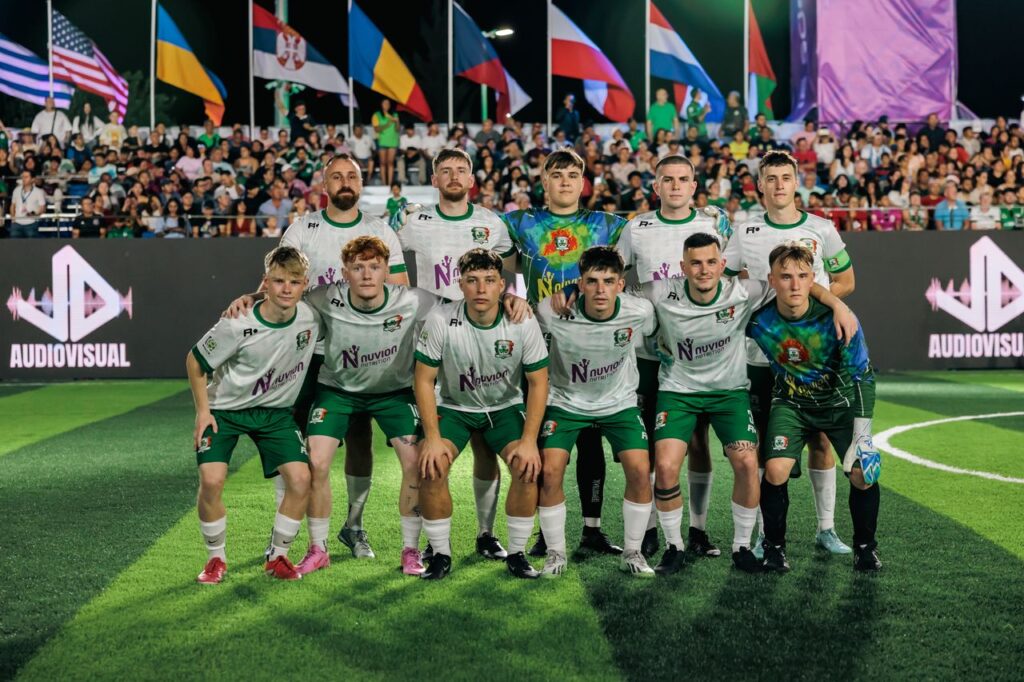

The maximum field of play is 60 meters x 35 meters. (However, the field of play may be smaller than this, depending on the specifications of the location).
The sizes for World Cups and Continental Cups are 44-48m x 25-28m.
The Penalty area on such dimensions should be 14m width x 7m depth.
Pitch Markings:
i. The sidelines are marked with a white line.
ii. The field is divided into two halves by a white middle line.
iii. Surrounding each goal is a box, marked by white lines, know as the goalkeeper’s box.
The goals will be 4m x 2m in size, and located in the middle of each shorter side of the pitch. The posts finish flush with the sideline. Advertisements are permitted on the goalposts, crossbar and nets if agreed by the Competition Committee.
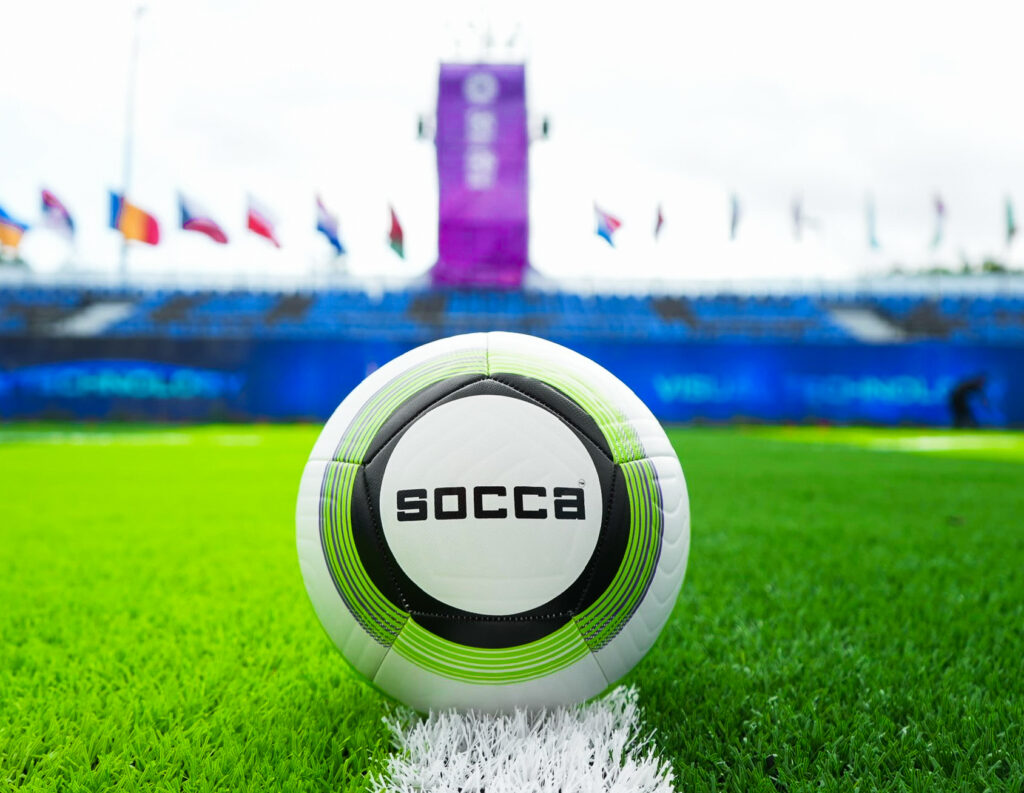
If the match ball fails to meet the above requirements the match must be stopped and a replacement ball to be sent onto the
field of play.
The Competition Committee has overall discretion over the usage of footballs during a competition.
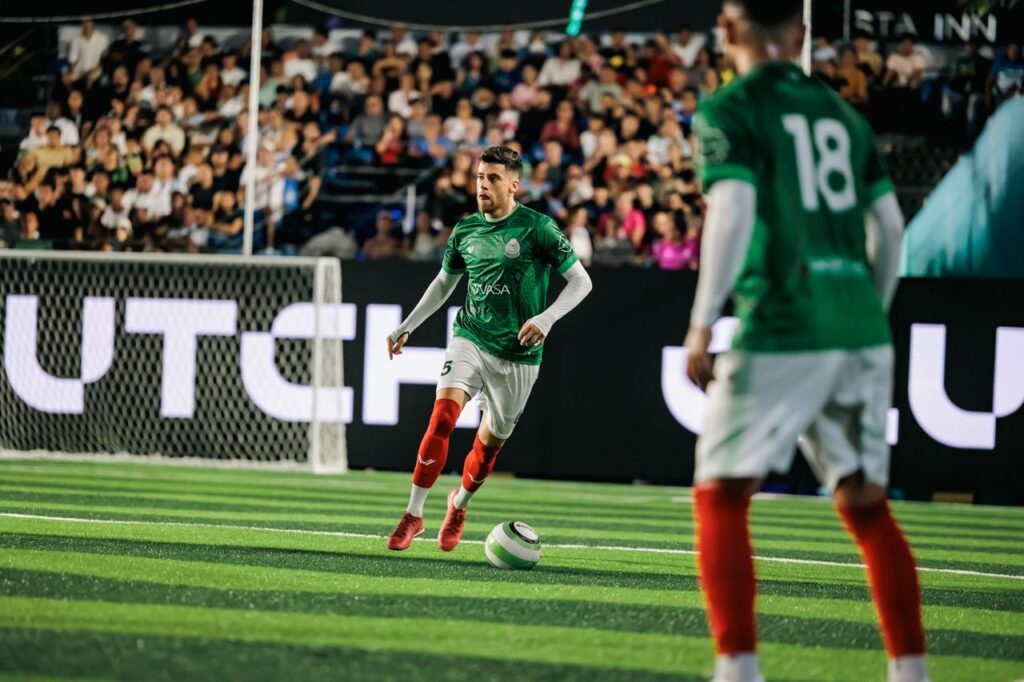
The standard match time for ISF competitions is 40 minutes (two halves of 20 minutes each), unless otherwise agreed for individual tournaments by the Competition Committee.
The two halves are divided by a 5-minute break.
The match referee is the sole timekeeper.
The Competition Committee shall decide which team sits on which bench for each game.
There is no offside rule in any ISF matches.
The goalkeeper may be taken out of the match and substituted for another outfield player (a ‘fly goalkeeper‘) at any point in the match. The fly goalkeeper must, however, wear an official ISF bib, provided by the match referees, as designation of a fly goalkeeper. The designated ‘fly goalkeeper’ must follow the rules for goalkeepers’ possession as outlined in rule 11.14 .
If a match is drawn at full time during the knockout stages of a tournament, a ‘Socca Penalty‘ shoot out will take place, as follows:
The World Cup fixtures are created by the Competition Committee. No friendlies matches or other matches can take place without the prior consent of the Competition Committee.
The team’s position within its group shall be determined in the following order:-
The winner and runner up of each group shall qualify for the knock-out stages. In the case of an odd number of teams in the tournament, best 3rd place teams may also qualify, at the discretion of the Competition Committee.
The knockout bracket will be outlined in full, including ‘Journey to the Final’ for all teams, in advance of the tournament, unless
for reasons decided solely by the Competition Committee, changes need to be made to the match scheduling (for example for
TV.)
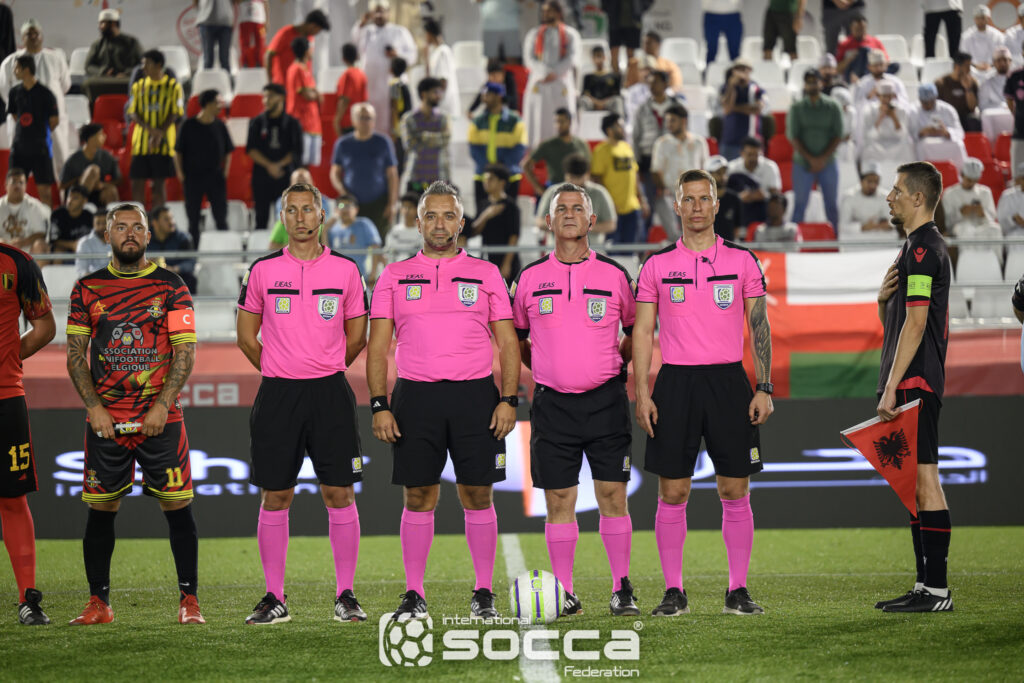
The Head of Referees are responsible for supervising the work of referees, answering any questions surrounding referee conduct and may appoint or suspend referees as he or she considers appropriate. The Head of Referees may not discuss incidents or video footage with teams after the matches.
The Television Match Official (TMO), at the discretion of the Competition Committee, may use video playback facilities during matches which will be solely controlled by the match officials, be at the sole discretion for use of the match officials, and the Television Match Official (TMO) may use video playback to communicate information to the officials on the pitch who may, at their sole discretion, decide to change a decision during the match. Any pressure, interference or requests by any player or coach or team official for any match official to use this system will result in the match officials automatically refusing to use the system, or penalising the team who have pressurised or requested use of the video playback system.


The choice of team bench/technical zone designation is pre-determined by ISF. Teams stay in the same designated end of the technical zone for the duration of the match and do not change at half time.
A person is only authorised in the technical zone if they fulfill all of the below criteria:
i.they hold a position related to the playing team as team staff.
ii.they have a valid tournament accreditation.
iii.they behave in an appropriate way.
The referees reserve the right to expel any person from the TZ if they do not meet the required criteria.
60 minutes before the match, each team must provide the Competition Committee with a list of all team personnel (maximum 14 persons at any one time) who will be in the Techincal Zone during the match. This may include:
i.Up to nine substitutes
ii.Up to five team staff (including coach, team manager, assistant manager, physiotherapist.)
Aside from the coach (and assistant coach, if applicable) every person in the technical zone must be seated during the match, unless a certain task dictates otherwise (such as a physiotherapist attending to a player).
During the match, team members must remain within the technical zone, as defined by the Competition Committee or Head of Referees. All players in the technical zone must wear coloured bibs or some other form of clothing to differentiate them from the players on the field, at the sole discretion of the Competition Committee.
The third referee (R3) will monitor behaviour within the technical zone and may sanction teams or players for poor behaviour, including ordering players to leave the playing area and technical zone.
Only one designated representative per team shall communicate with the third referee (R3) and the communication must be from the techincal zone. The name of this person must be supplied to the Competition Committee prior to each match.
The referees have the authority, if they so wish, to order any individual who receives a red card, either within a team or as part of a team’s management, to leave the stadium entirely. Should that individual attempt to return to the stadium before the match has ended then the team will be sanctioned by the Disciplinary Committee.
Team staff, such as photographers, media staff or ISF members, are only authorised access to the technical zone for their own team’s matches. The Competition Committee and referees are instructed to remove any individuals from the technical zone who are not ISF staff and are not connected to the team(s) in play. In the same way, only ISF staff are authorised in the technical zone during the ceremonies and any team staff attempting to positioned theirselves in the technical zone during the ceremonies will be asked to leave.
All opposition players must be a distance of 5 meters from the ball at any restart (E.g., a goal kick, kick in, free kick).
All free kicks are direct. Goals can be scored direct from a goal kick, kick in, corner and kick off.
There are no indirect free kicks in ISF matches, including offences committed inside the goalkeeper’s box. Any offence committed inside the goalkeeper’s box by the defending team will result in a Socca penalty kick against the defending team.
A kick-in is awarded to the team which did not last touch the ball, when the ball leaves the field of play over any of the side lines. The ball must be placed on the ground stationary on or before the side line at the place where it went out. Except for goal kicks where it can be placed anywhere inside the goal area.
A drop ball will be used to restart the match after a temporary stoppage, such as a serious injury, the ball deflating or being damaged or the ball hitting an object that is not part of the field of play. Ball is given to the team in possession of the ball when the game was paused.
If an incident occurs inside goalkeeper’s box that requires a drop ball, then the drop ball is for the goalkeeper.
Slide tackling against or next to an opponent is always considered a foul. A player can not challenge a player with a sliding challenge/tackle within 1 meter of the player in possession of the ball.
Slide tackling to prevent the ball from going out of play or into the goal is allowed when there are no nearby opponents.
Screening is when a player tries to delay or prevent an opponent who is not in possession of the ball from reaching a desired position on the pitch.
Screening will be classed as legal providing the player who sets up the screen:
i. Stands completely still (inside his cylinder with his hands to the body) when ‘contact’ is made.
ii. The player has both feet on the turf and does not move when ‘contact’ is made.
Screening will be classed as obstruction, and therefore a foul will be awarded to the defending team, when the player who sets up the screen:
i. Moves when contact is made.
ii. Uses his hands in contact e.g. grabs the opponent, enlarges his natural body shape.
iii. Pushes the opponent with his hands or body to change the players normal running path.
Substitutions are unlimited and may occur at any time during play, under the observation of the referee positioned at the halfway line. The exiting player must have left the playing area before the substitute player crosses the sideline. If a player is injured they may leave the field from another point, but the player replacing them must enter at the halfway line upon authorisation of the referee.
The ISF Logo must be printed on the right sleeve of each player’s jersey. The correct logo file will be supplied to each team by ISF.
The player being replaced must immediately put on the substitutes bib supplied and return to the technical zone.
The match referee has the right to penalize any team for ‘passive play’ during the match if, in the official’s opinion, the team in possession of the ball has not made a clear move to form an attack (E.g., moving the ball forward towards the opponent’s goal) towards the opponent’s goal. Passive play can include, but is not limited to, slow play, time wasting or restricting the competitiveness of the game. The match referee will signal a 5 second warning for passive play by raising his arm in the air and announcing ‘5 seconds’. From this moment the team in possession has 5 seconds to start forming an attack. If at the end of the 5 second warning period the official deems no attempt has been made to form an attack, a free kick will be awarded to the opponents. If the incident occurs inside the goalkeeper’s area, a free kick will be awarded on the edge of the penalty area.
All penalty kicks during normal time will be a ‘Socca Penalty’.
To start, the ball is positioned on the centre spot and a designated penalty taker must make himself aware to the referee. The remaining players from both teams must be positioned in the non-penalty half of the pitch, at least 3 meters from the half line, and are not permitted to enter the other half for the duration (10 seconds) of the penalty kick.
The goalkeeper must start on his goal line. The penalty kick taker has 10 seconds to shoot. The player may shoot from any position on the pitch. The defending team goalkeeper may also move to any position on the pitch.
If during the 10 seconds, while “Socca Penalty’’ is taken, any other player or team’s staff member enters the field or intervene, goal could be disallowed if attacking team intervene, or goal could be awarded if defensive team intervene.
The penalty is over when:
i.The ball enters the goal (result = goal, normal restart)
ii.The goalkeeper fouls the player (result = goal, normal restart)
iii.The ball leaves the field of play (result = no goal, goalkeepers’ kick.)
iv.The penalty taker fouls the goalkeeper (result = no goal, goalkeepers’ kick)
v.The goalkeeper has possession of the ball and holds it in his hands (result = no goal, goalkeepers’ kick. )
vi.The 10 second period finishes without any of the above taking place (result = no goal, goalkeepers’ kick.)
A goalkeeper, whether primary or flying, is allowed to touch the ball with his feet within the green areas (shown in diagram below) under any circumstances, (for example; making a tackle, making a save, clearing the ball, dribbling out with the ball, receiving a pass from a teammate or shooting at goal.) as many times as they want without restrictions. This allows the goalkeeper to leave his area whilst dribbling the ball to create for a more exciting game.
Within the red area, the goalkeeper (primary or flying) is allowed to touch the ball with his feet under any circumstances, (for example; making a tackle, making a save, clearing the ball, dribbling out with the ball, shooting at goal) as many times as they want but they are NOT permitted to receive the ball via a pass from a teammate. This will result in a free kick to the opposing team.
This is to prevent slow play from the team in position of the ball.

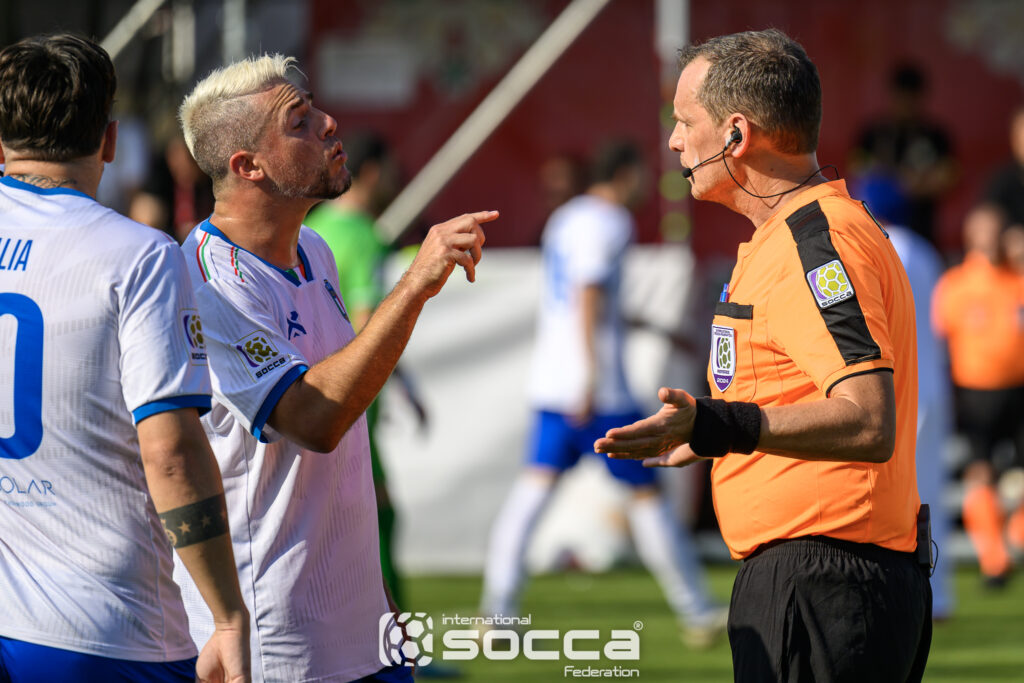


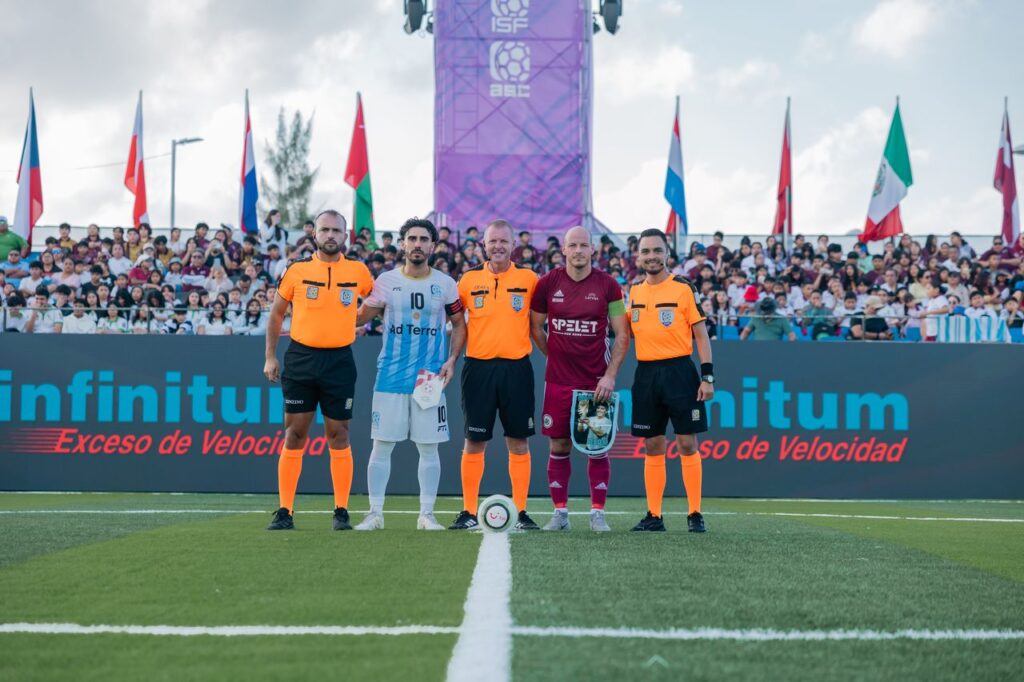
The ISF believes in the absolute authority of the referees. In the final instance any referee on the pitch may take any action he or she deems necessary in order to ensure that the on-field players, and all those in the technical zone, act and behave appropriately. Allied to this, the following rules shall be enforced.
A yellow card is an automatic (“sin bin“) offence (2 minutes) and can be provided to either a player, coach, manager or official of the team. A replacement player is NOT allowed to replace the sin binned player for the duration of the punishment.
A referee can decide to give a 2-minute penalty (“sin bin“) to any player, at any time, during the match. Examples of instances where this might be applicable would be (non-exhaustively) being abusive or swearing at a Referee, or in relation to an official, single bad fouls, or persistent fouling.
The match referees are the sole timekeeper of the two minutes sin bin and the match referees have the authority to increase the duration of the sin bin should they be unnecessarily pressurised by either the player or the team or members of the technical zone in the timing of the two minutes period.
When one team plays with one man advantage and score, the team that was short-handed may return to full strength. However, this does not include the player who received the yellow card and who is in sin bin. That player must serve the full two minutes.
When one team plays with two men advantage and score, one player may return to the pitch (except a player who is in sin bin).
If both teams have players in the sin bin but on the field play with equal number of players and one team scores, no player is allowed to reach the full-strength of team therefore no advantage was used.
The match is to be continued with same number of players as before.
Multiple/unlimited yellow cards (‘’sin bins’’) can be given to players throughout the match.
If a player, coach, manager or official receives a straight red card, he is fully banned from the current match and at least the next match.
The ban will apply at all stages of the tournament. (e.g. a ban in the group stages also applies to the knockout rounds).
The Competition Committee can extend the ban.
If a player, coach, manager or official receives a straight red card, his/her team has to play one player down for 10 minutes.
Once these 10 minutes have elapsed, a player from the team may return to the pitch, but not the player who received the red card. If a team concedes a goal during this period, NO player may return to the pitch. The 10-minute penalty must be served in all cases.
The referees are encouraged to deliver immediate red cards should either their authority be challenged in any way, or they
feel a team is not playing in the correct sportsmanlike spirit.
If a player is abusive or swears at a Referee, or the Referee feels intimidated in any way, he should give a player an immediate red card.
A person who receives a red card must leave the technical zone (and stadium, if requested) immediately and may not re-enter at any point during or directly after the match. 10 minutes sin bin must not be served physically.
If a coach, manager, substitute or member of a countries technical staff receives an immediate red card then the team will play with one less player for the remainder of the match.
f a player gets 3 or more yellow cards he receives a 1 match ban (for the upcoming match).
The Referee will move a free kick forward by 5 metres if there is dissent towards him/her and may repeat such sanction and continue to move the ball forward in increments of five metres as he or she sees fit. If, by moving the free kick 5 meters forward, the offence is in the penalty area then a penalty shall be awarded. The intention of this is to eliminate dissent towards a referee completely.
The Competition Committee has the authority to increase the length of any suspension of any player, coach, manager or official for any reason during the tournament.
The ISF Competition Committee and Head of Referees is Mareks Kere. The ISF Deputy Tournament Director is Simon Grlec.
If a match is abandoned or cancelled at any point during the match, play will restart at the point at which the match was abandoned and the score will start the same.
If a match is abandoned or cancelled at any point because of the behaviour of a particular player or team then the Competition Committee can unilaterally decide to award the match and decide the score to whichever team the Competition Committee considers is appropriate.
If any one team receives 3 red cards in the same match, the match will be abandoned, the Competition Committee can unilaterally decide to award the match against this team. (Note) If any one team recives 2 red cards and 1 yellow card, the match will continue.
The Competition Committee has the authority to exclude any player, coach, manager or member of a team, for howsoever long the Competition Committee decides, including for the duration of the tournament, should it be necessary.
In all circumstances, the decision of the Competition Committee is final.
The following sanctions may be imposed on members [associations] or individuals:-
i. Warning; or
ii. Reprimand; or
iii. Fine; or
iv. Suspension for a specified number of matches, in specified Tournaments or at a specified level, or for a specified period;
v.Suspension from carrying out a function for a specified number of matches or for a specified period; or
vi.Deduction of points earned in a Tournament (or league) or relegation from one division to a lower division; or
vii.Compensation to any party affected by the breach; or
Expulsion from the Tournament or Competition and/or ban from future Tournaments/Competitions; or
Any disciplinary sanctions may be imposed as suspended sanctions, except for i), ii) and ix) above. The above list is in no priority order.
The ISF can use any of the above sanctions at any time

The ISF has a duty to ensure our members understand our rules and we therefore offer some practical advice and explanation on some of our rules.
11.2. States that all free kicks are direct. There are no indirect free kicks in ISF matches, including offences committed inside the goalkeeper’s box. Any offence committed inside the goalkeeper’s box by the defending team will result in a penalty kick against the defending team.
This is to ensure that ISF matches are more direct and exiting game. Players need to be aware that there are no indirect free kicks and offences inside the Goalkeepers Area will result in a penalty if the offence is committed by a defending team.
12.16. Is the rule that allows a match official to move the ball forward 5 metres for certain offences. This is an added tool for a match officials for preventing dissent and poor behaviour in addition to the sin bin.

11.7. States that players are not allowed to slide challenge a player when the player has the ball in their possession. The ethos of the rule is to protect players, ensure a fluid game and to prevent injuries. Players can however, slide to prevent the ball from going out of play and to prevent a goal as long as a opponent is not nearby. A goalkeeper can save a shot with their feet from within the goalkeepers area.
As a guide, players need to imagine a circle around the player of 1 metre. If a player does not slide tackle in this imaginary circle, a foul will not be awarded against you.

The below diagram shows the positions match officials will take at the start of the ISF penalty procedure. Note the timekeeper is facing away from play and will blow the whistle to start and finish the ISF Pen. The timekeeper will not wear a communication head set for the full duration of ISF penalty procedure.

Stay updated with real-time match scores & exclusive tournament insights on the International Socca Federation App!

All Copyright reserved by International Socca Federation © 2026